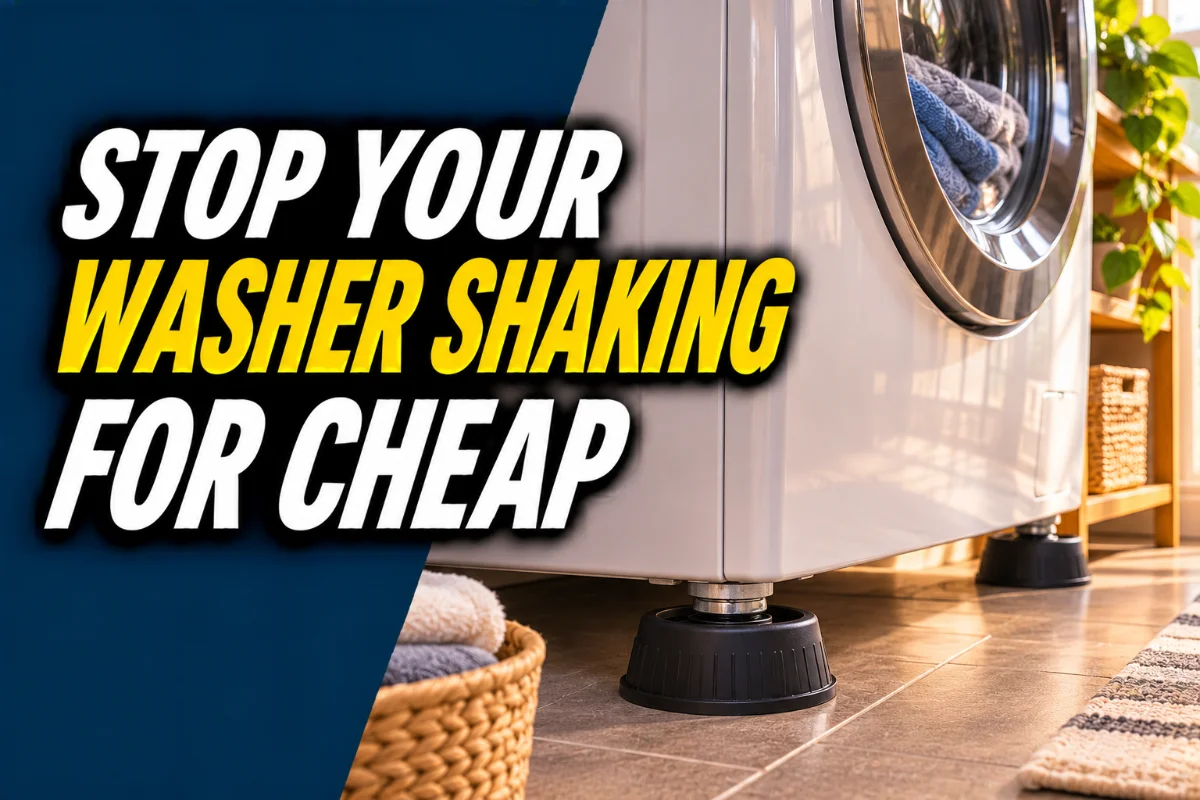
Best Anti-Vibration Pads for Washers: Stop the Shaking and the Walking
If your washer sounds like it’s trying to escape the laundry room every time it spins, you’re not alone. Front loaders spin fast, and on a wood floor, an upstairs laundry room or a slightly uneven slab, that energy turns into thumping, rattling and a machine that slowly walks across the floor.
Anti-vibration pads are a cheap, simple fix. They’re rubber or silicone cups that sit under each foot, grip the floor and soak up some of the shake. They won’t fix a broken washer, but for the price of a takeout lunch they can make a loud machine noticeably quieter.
This post contains Amazon affiliate links. If you buy through them, we may earn a commission at no extra cost to you.
Quick picks
| Pick | Best for | Look for | Link |
|---|---|---|---|
| Rubber anti-vibration cups (set of 4) | Most front and top loaders | Deep cups that fit your washer’s feet | Find it on Amazon |
| Thick anti-vibration mat | Upstairs laundry, wood floors | Full-footprint mat, slip-resistant base | Find it on Amazon |
| Adjustable leveling feet with pads | Uneven floors | Height adjustment plus rubber base | Find it on Amazon |
| Bubble level | Leveling before adding pads | Small torpedo level | Find it on Amazon |
How we picked
We compared what buyers report about noise and walking, how well different pad shapes fit common washer feet, and what manufacturers say about leveling. We didn’t test these ourselves, so focus on the fit and material details below rather than any single brand.
Do anti-vibration pads actually work?
Yes, within limits. Good pads do three things: they stop the washer from sliding, they absorb some vibration before it reaches the floor, and they reduce rattling noise. What they can’t do is fix an unbalanced load, worn shock absorbers or a washer that isn’t level. If your washer shakes violently only with certain loads, that’s a balance problem, and pads are a supporting act, not the fix.
Types of anti-vibration pads
| Type | Pros | Cons |
|---|---|---|
| Rubber cups | Cheap, grippy, easy to install | Must match foot size |
| Silicone pads | Quieter, don’t mark floors | Can be softer and squish more |
| Full mat | Covers the whole footprint, catches small drips | Costs more, takes space |
| Leveling feet | Fix uneven floors and add grip | More work to install |
What to look for
- Fit. Measure your washer’s feet. The cup should be wider than the foot, with a lip deep enough to hold it.
- Material. Dense rubber grips well. Very soft pads can let the washer rock more.
- Height. Pads raise the washer slightly. Make sure the door still clears anything below and the drain hose isn’t stretched.
- Floor type. On tile or vinyl, grip matters most. On wood, a wider pad or mat spreads the load.
How to install them
- Unplug the washer and pull it out a little.
- Check it’s level side to side and front to back. Adjust the feet first.
- Tilt the washer slightly and slide a pad under each foot. A helper makes this much easier.
- Recheck with a level, since pads can change the height slightly.
- Run a spin cycle and listen.
Pads vs. a pedestal
Some people put their washer on a pedestal drawer to raise it to a more comfortable height. Pedestals are great for your back, but they can make vibration worse because the washer sits higher and has more leverage to rock. If you use one, make sure it’s the manufacturer’s matching pedestal, that it’s level, and that the washer is bolted or locked to it as the instructions describe. Don’t stack pads on top of a pedestal unless the manufacturer says that’s fine.
A quick noise check
Not sure if pads helped? Record a short video of the final spin on your phone before and after. It’s an easy way to hear the difference, and it tells you whether the remaining noise is coming from the floor or from inside the machine.
When pads won’t fix it
If the washer bangs hard, stops mid-spin or shows an unbalanced load code, start with the load: spread clothes evenly and don’t wash one heavy item alone. If that doesn’t help, worn suspension parts are likely. Pads are worth having either way, but they’re not a substitute for a repair.
Our take
Level the washer first, then add a set of deep rubber cups. That combo fixes most walking and a lot of the noise for very little money. If your laundry room is upstairs or on a wood floor, go for a full anti-vibration mat instead.
FAQ
Do anti-vibration pads work on washers?
Yes. They reduce sliding, noise and some vibration, especially on hard floors. They won’t fix unbalanced loads or worn parts.
Should I use pads on a front load washer?
They help most on front loaders, which spin faster and shake more.
Can anti-vibration pads damage floors?
Good rubber or silicone pads protect floors. Check that the material won’t stain light vinyl.
Do I need to level my washer before adding pads?
Yes. Level it first, then recheck after adding pads.
Are anti-vibration mats better than cups?
Mats suit wood floors and upstairs laundry rooms. Cups are cheaper and fine for most setups.





One Comment