Best Stainless Steel Washer Hoses: Why Braided Hoses Are Worth the Upgrade
The rubber hoses that came with your washer are probably the weakest part of your laundry setup. They sit under pressure all day, every day, and when they fail, they don’t drip. They burst. A burst supply hose can dump a lot of water in a hurry, especially if nobody’s home.
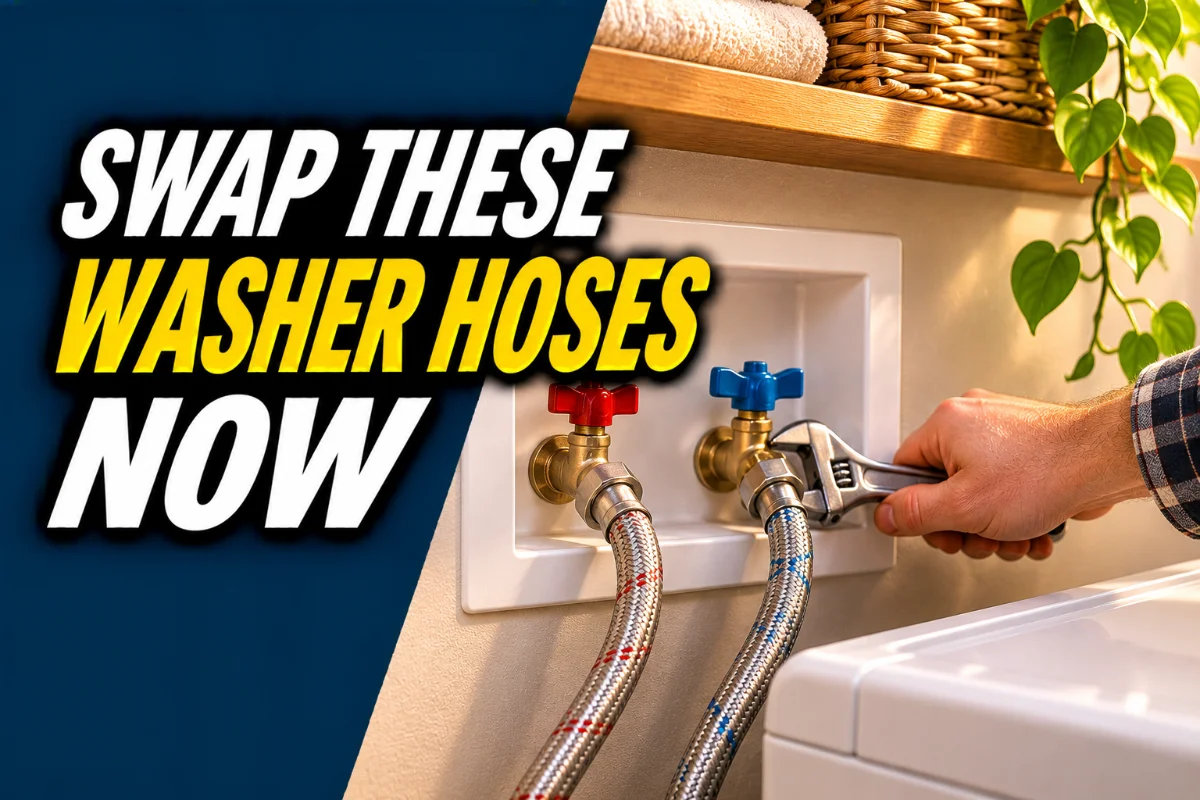
Braided stainless steel hoses wrap the inner tube in a woven metal jacket. They resist kinks, bulges and bursts much better than plain rubber. They’re cheap, they take ten minutes to install, and they’re one of the easiest ways to protect your home from a washer flood.
This post contains Amazon affiliate links. If you buy through them, we may earn a commission at no extra cost to you.
Quick picks
| Pick | Best for | Look for | Link |
|---|---|---|---|
| Braided stainless washer hoses (2-pack) | Replacing old rubber hoses | Brass fittings, the right length | Find it on Amazon |
| 90-degree elbow washer hoses | Washers pushed close to the wall | Elbow fitting at the washer end | Find it on Amazon |
| Extra-long washer hoses | Valves far from the washer | Measure first, add a little slack | Find it on Amazon |
| Hose washers and inlet screens | Leaky connections, clogged inlets | Replacement rubber washers with screens | Find it on Amazon |
How we picked
We compared hose construction, fitting types and the lengths buyers need most, plus what manufacturers recommend for installation. We didn’t pressure-test hoses ourselves, so stick with the fittings and lengths checklist below.
Why rubber hoses fail
Rubber breaks down over time from pressure, heat and age. Hoses get kinked when the washer’s pushed back, and bulges form where the rubber weakens. Many manufacturers and insurers suggest replacing washer supply hoses about every five years, even if they look fine.
Signs it’s time to replace your hoses
- Bulges or blisters along the hose
- Cracks near the fittings
- Rust or corrosion on the ends
- Drips at the connections
- Hoses older than about five years
What to look for
- Length. Measure from the wall valve to the washer inlet, then add a little slack so you can pull the washer out. Avoid hoses so long they loop and kink.
- Fittings. Standard washer hoses use 3/4-inch hose threads. Brass fittings resist corrosion better than plastic.
- Elbow ends. A 90-degree fitting lets the washer sit closer to the wall without kinking the hose.
- Inner tube. Look for a quality rubber or PEX inner tube under the braid.
- Sold in pairs. You need one for hot and one for cold.
How to install them
- Turn off both water valves behind the washer.
- Put a bucket or towel underneath and unscrew the old hoses from the valves and the washer.
- Check the washer’s inlet screens and clean any debris.
- Screw the new hoses on by hand, then snug them a quarter turn with pliers. Don’t overtighten.
- Make sure hot goes to hot and cold goes to cold.
- Turn the water on slowly and check every connection for drips.
- Push the washer back without kinking the hoses.
Don’t forget the drain hose
Supply hoses get the attention, but the drain hose matters too. Check that it isn’t cracked, crushed against the wall or pushed so far down the standpipe that it seals tight. A drain hose extension can help if your standpipe is a little out of reach, but keep the run as short and straight as you can.
Turn the water off when you travel
Even with good hoses, it’s smart to close the washer’s water valves before a long trip. It takes ten seconds and removes the risk entirely while you’re gone.
Does this help with fill errors?
It can. Kinked or collapsed hoses restrict water flow and can trigger fill errors on some washers. New hoses with a gentle bend, plus clean inlet screens, solve a lot of slow-fill problems.
Our take
If your hoses are rubber and more than a few years old, replace them with braided stainless. Pick brass fittings and an elbow end if your washer sits close to the wall. Add a water leak detector behind the washer and you’ve covered the two cheapest flood protections there are.
FAQ
Are stainless steel washer hoses better than rubber?
Yes. The braided jacket resists bursts, bulges and kinks much better than plain rubber.
How often should washer hoses be replaced?
A common recommendation is about every five years, or sooner if you see bulges, cracks or leaks.
What size are washing machine hoses?
Most use standard 3/4-inch hose thread fittings. Check your washer’s manual.
Do I need 90-degree washer hoses?
They help if the washer sits close to the wall, since they prevent kinks at the back.
Can I install washer hoses myself?
Yes. Turn off the water, swap the hoses and check for leaks. It takes about ten minutes.