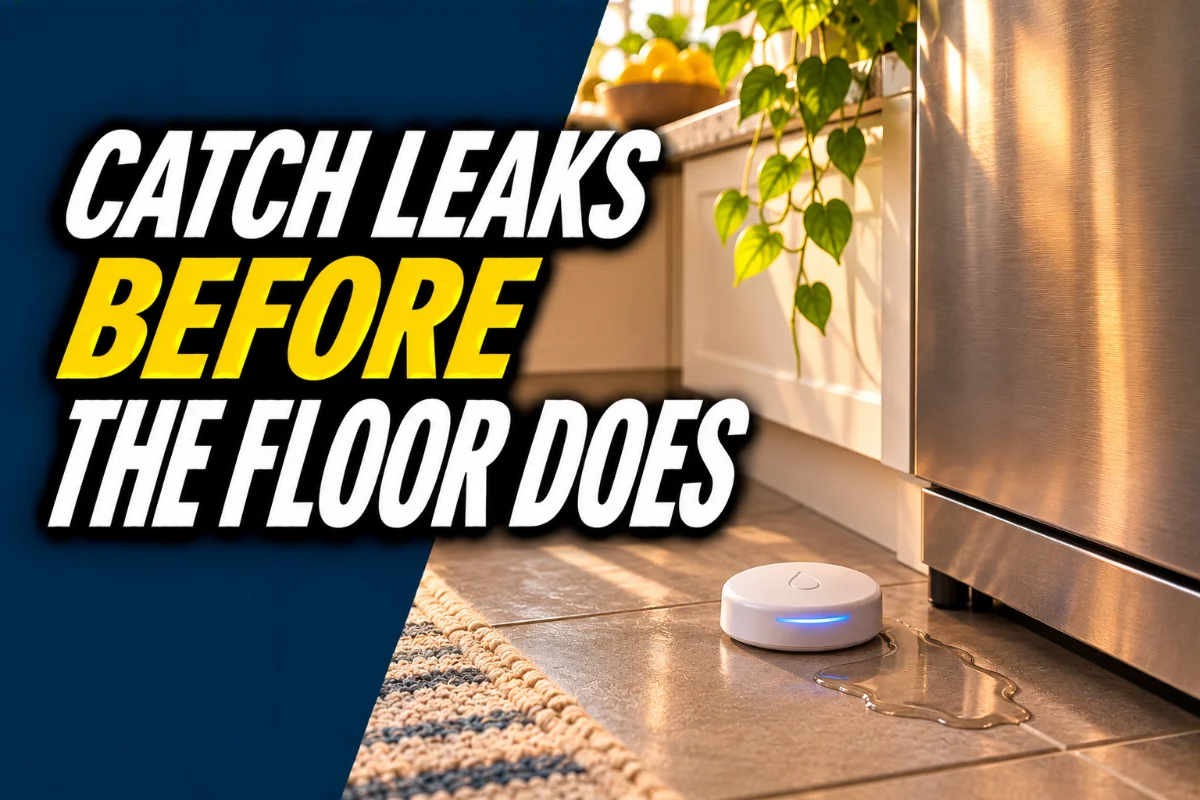
Best Water Leak Detector for Washers and Dishwashers (Catch Leaks Before the Floor Does)
Washers and dishwashers fail quietly. A loose hose, a cracked pump or a tired door seal can drip for days before anyone notices, and by then you’re dealing with a soft subfloor, a stained ceiling or a nasty insurance claim.
A water leak detector is a small sensor that sits on the floor and screams (or texts you) the moment it gets wet. It’s one of the cheapest bits of insurance you can buy for a laundry room, kitchen or water heater closet.
This post contains Amazon affiliate links. If you buy through them, we may earn a commission at no extra cost to you.
Quick picks
| Pick | Best for | Look for | Link |
|---|---|---|---|
| Battery water leak alarm | Cheap, simple protection | Loud alarm, long battery life | Find it on Amazon |
| Smart Wi-Fi leak sensor | Alerts when you’re away | Phone alerts, app, no hub needed | Find it on Amazon |
| Leak sensor with remote probe | Tight spots behind appliances | Sensing cable or probe on a wire | Find it on Amazon |
| Washer drain pan | Catching drips under the washer | Size that fits your washer, drain outlet | Find it on Amazon |
How we picked
We looked at how the main types of detectors work, the features buyers rely on most (volume, alerts, battery life) and where they’re most useful around appliances. We didn’t test specific models, so use the checklist below to compare.
Three types of leak detectors
| Type | How it alerts you | Best for |
|---|---|---|
| Battery alarm | Loud beeping on site | Homes where someone’s usually around |
| Smart Wi-Fi sensor | Phone notification, sometimes alarm too | Travel, rentals, second homes |
| Auto shutoff system | Closes a valve on the water line | Maximum protection, higher cost |
Where to put them
- Behind or under the washer, near where the hoses connect.
- Under the dishwasher or in front of the kick plate, where leaks usually show first.
- Under the kitchen sink, near the supply lines and garbage disposal.
- Beside the water heater.
- Near the fridge if it has an ice maker or water line.
Put sensors on the floor at the lowest point where water would collect. Some have a remote probe on a wire, which helps when there’s no room behind an appliance.
What to look for
- Alert type. A battery alarm is fine if you’re home. If you travel or work long hours, you want phone alerts.
- Battery life and low-battery warnings.
- Hub or no hub. Some smart sensors need a hub. Wi-Fi models connect directly.
- Temperature alerts. Some sensors also warn about freezing temperatures, which helps prevent burst pipes.
- Volume. A loud alarm matters if the laundry room is far from where you sleep.
Pair it with a drain pan
A washer drain pan sits under the machine and catches small leaks, giving you time. Many have an outlet you can connect to a floor drain. Put the leak sensor in the pan and you get both early warning and some containment.
How many do you need?
Start with one per wet spot that would hurt the most if it leaked. For most homes that’s three or four: the washer, the dishwasher, the kitchen sink and the water heater. Bathrooms and the fridge come next. Leak sensors are cheap enough that it’s worth covering every appliance with a water line.
Test them once in a while
Most battery alarms have a test button. Press it every few months, and wet the sensor contacts with a damp cloth once a year to make sure it actually goes off. Smart sensors usually report their battery level in the app, which makes this easier.
A detector is not a fix
If the alarm goes off, find the source. Common culprits are loose or worn supply hoses, a leaking door seal or a failing pump. Turn off the water to the appliance first, then troubleshoot.
Renters benefit too. A battery alarm doesn’t need any installation, and catching a leak early can save you a fight with your landlord over your deposit.
Our take
Start with cheap battery alarms behind the washer and under the dishwasher and sink. If you’re away from home a lot, upgrade the most important spots to Wi-Fi sensors. It’s a small cost compared to a single water damage repair.
FAQ
Do water leak detectors really work?
Yes. They sense water on the floor and alert you right away, which can stop small leaks from becoming big damage.
Where should I put a water leak detector?
Behind the washer, under the dishwasher and sink, beside the water heater and near the fridge.
Do I need a smart leak detector?
Only if you want alerts when you’re away. Battery alarms work fine if someone’s usually home.
How long do leak detector batteries last?
It varies by model, often a year or more. Choose one with a low-battery warning.
Can a leak detector shut off water?
Only systems with an automatic shutoff valve. Standard sensors just alert you.





One Comment